Table of Contents
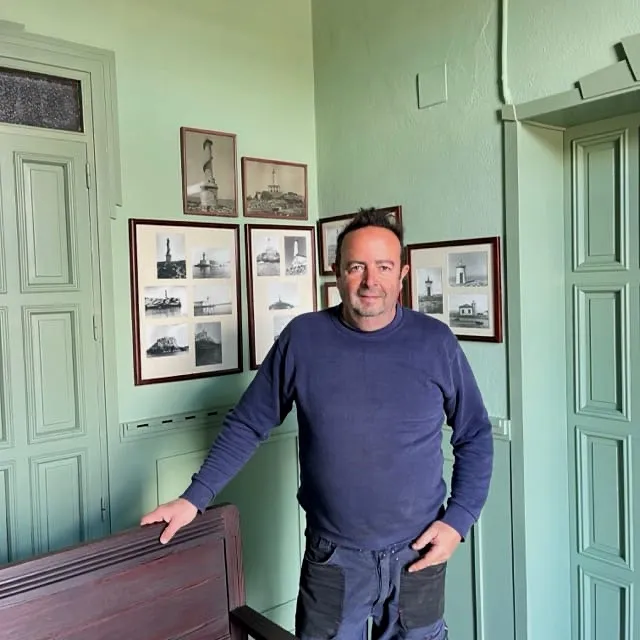
My name is Santiago Rivas. I am the lighthouse keeper of Ibiza and Formentera. My entire life I have spent in lighthouses.
Until I was 16, I lived in the Faro de la Mola on Formentera – at the end of the world, where the land stops and the sea begins to breathe. After that came San Antonio, then Covas Blancas. Since 1996 I've been in Botafoch. But La Mola was my childhood. My first silence.
The Last Silence
There was no telephone. No internet – of course not – but also no telephone. Everything had to be passed from mouth to mouth. If you wanted to speak with someone, you had to go there. On foot. Or later, if you were lucky, by bicycle.
Letters took a week. Sometimes a fortnight. Then you waited for the reply. Another week. That was the tempo. That was the time.
If we wanted to buy something – say, a tool, a book – we saw an advert in the newspaper. Filled in a form. Sent it off. Waited. I no longer remember how we paid. Bank transfer perhaps. But it took weeks until the parcel came.
Today you press a button. The thing is there tomorrow.
But we didn't need these things. We could live without much that seems indispensable today. And we were – at least I believe this – just as happy as people today with all their possessions.
The Friend, a Kilometre Away
My nearest friend lived almost a kilometre away. As a child, that was far. Very far. I walked to him. He came to me. We played.
We had a few plastic toys – not many – but mostly we invented our own games. We threw stones into the sea. For hours. Watched how they flew through the air, how they touched the water – first soundless from the height, then the splash, then the circles that spread out and disappeared. Each stone a small story. Each throw an event.
The sea always had time. So did we.
We weren't glued to screens all day. We couldn't be. We had to use our imagination. Or we got bored. As a young person you get bored quickly – you need activity, movement. But we had the sea. We had the sky. At night the stars, so clear you thought you could grasp them. By day the blue that knew no boundaries.
The bicycle made everything easier. Suddenly the kilometre was no problem.
The Ship from Marseille
There was a ship. A large ship that came past once a week. Most ships didn't sail so close to La Mola – there was no reason to. But this ship, the Masalia from Marseille, came regularly. Always at the same time.
We waited for it.
We had the official flag of the lighthouse. Fastened to a long pole. When the Masalia came, we ran to the edge of the cliff. The wind tore at the flag, at our hair, at our shirts. We waved it. Wildly. With both arms.
And the ship answered.
The horn. Loud. Long. A sound that carried over the water and crashed against the rocks. A greeting from the wide world that came to us and went back.
For us that was fantastic. That was communication. That was connection. A ship from France greeted us back. We were not forgotten. We were part of something larger.
There wasn't much else to do. But that was enough.
Strangers Come, Strangers Go
Then they came. Strangers with long hair, colourful clothes, different ideas. The hippies. They rented the old houses – half-ruined, for little money. They brought money with them and a new way of living. Some locals liked them. Others didn't. But there were no great conflicts. They were only passing through. Guests. The island remained what it was.
Later came tourism. Properly. In masses. The people I knew – the farmers, the fishermen – transformed. Suddenly restaurants. Flats. Money. The island changed with them.
But the lighthouse remained. The light remained.
The Light
At night, when the lighthouse turns its light, it casts long shadows over the water. Four seconds light. Four seconds darkness. Four seconds light. A rhythm older than the silence I knew as a child.
The light warns. The light guides. The light says: Here are the rocks. Here is the land. Here you are safe.
Ships today need GPS. Satellites. Computers. They don't need the light as they once did. But it burns anyway. From tradition. From safety. From respect for those who still orient themselves by it.
I have spent my life between light and darkness. Between land and sea. Between silence and noise. And the light continues to turn. Every night. Without asking if anyone is watching.
It is simply there.
Between the Times
Today I live in Botafoch. A different lighthouse. Closer to the city. Closer to the noise. I am older now. I have seen many changes. Many transformations.
The young people today – sometimes I don't understand them. They are constantly at screens. Constantly connected. But are they really connected? Or just alone together?
We had to go to people to speak. Walk a kilometre. Write letters. Wait weeks. That was slow. But it was real. When someone said "I'll come tomorrow", they came. Or they didn't come, and you knew: something has happened.
Today everything is instant. But is it better?
I don't know. Perhaps I'm just old. Perhaps I think like every generation: the youth are doing it wrong. But then they grow old, and they think the same about the next generation.
Perhaps that is the cycle. Like the light. Four seconds bright. Four seconds dark.
What Remains
When I think back to La Mola – to the cliff, to the wind, to the flag, to the ship from Marseille – then I think: we had little. But we had enough.
The sea was always there. The stars were always there. The friend, a kilometre away, was there. The ship greeted back.
That was enough.
The island has changed. The people have changed. But the light continues to turn. Every night. Four seconds. Four seconds. Four seconds.
A rhythm that remains when everything else goes.
That is my life. The light between sky and sea.
Santiago Rivas, lighthouse keeper, has lived and worked since 1996 in the lighthouse of Botafoch. He spent his childhood in the Faro de la Mola, Formentera – at the last quiet place before the world grew loud.
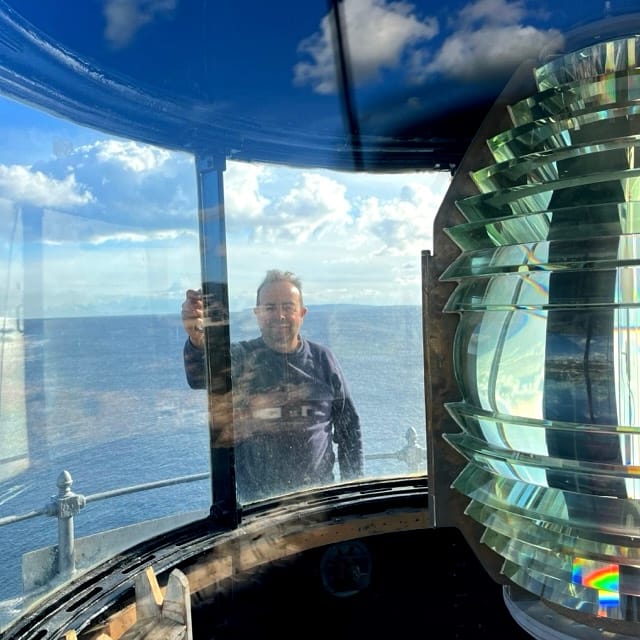
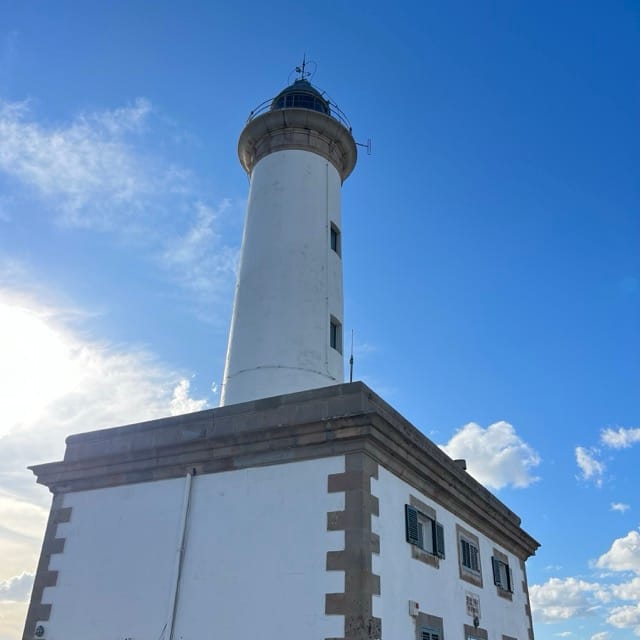
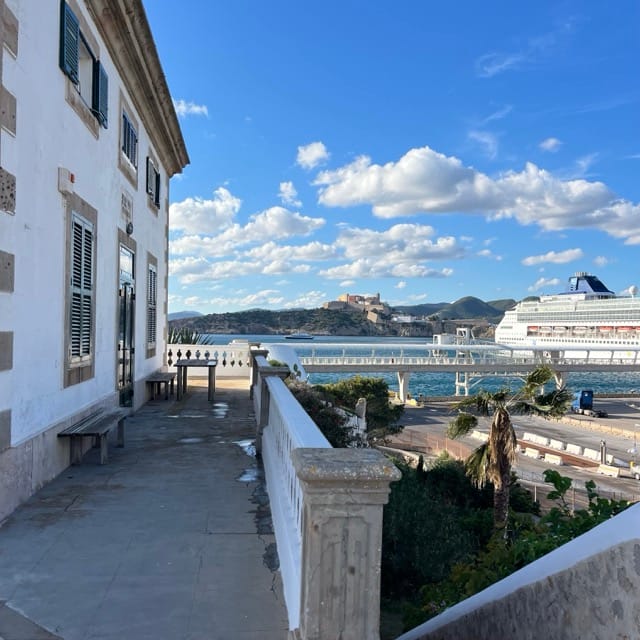
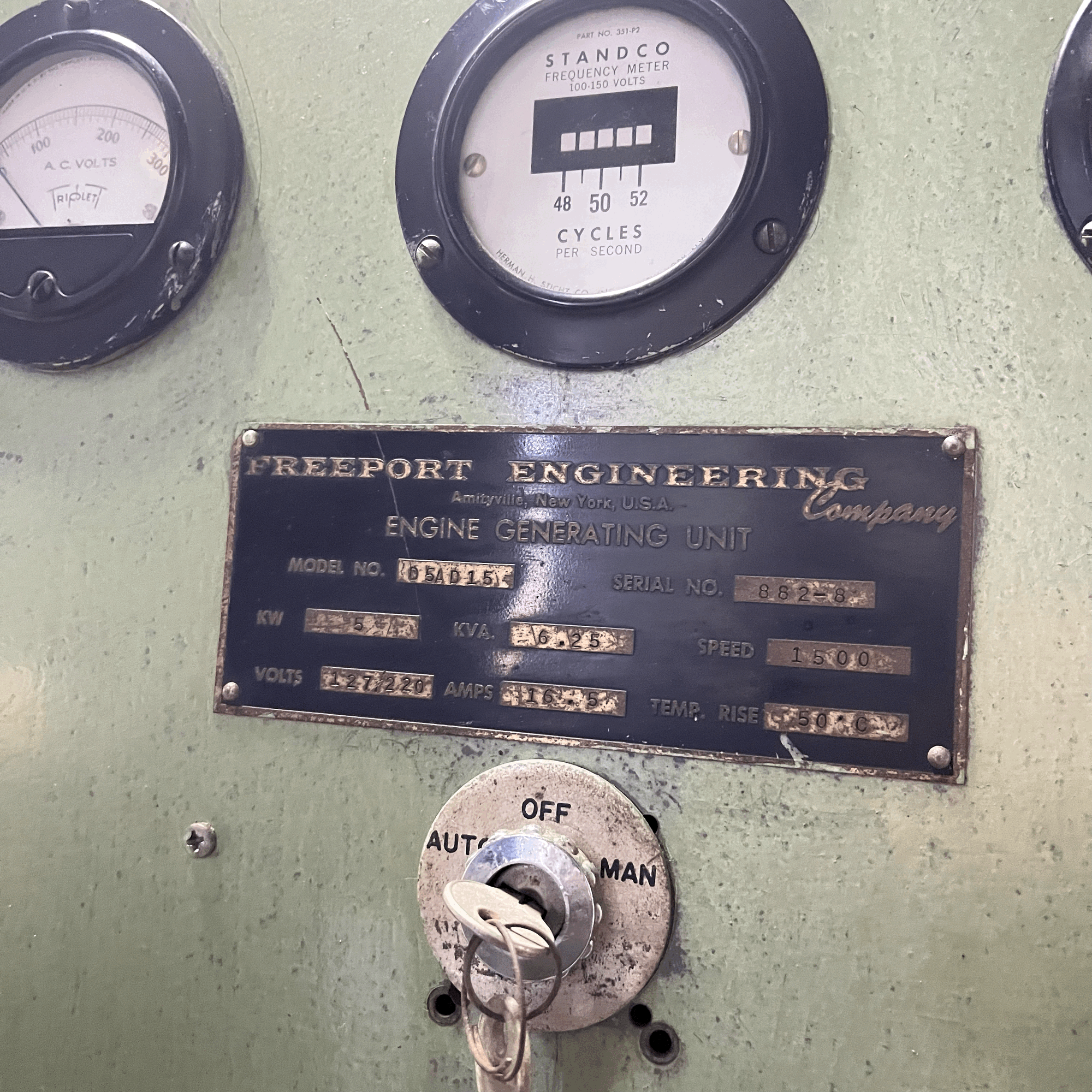
Bota Foch Lighthouse. Inaugurated in 1861, the lighthouse celebrated its 150th anniversary in 2011 and serves as a landmark with its unusual two-storey structure.